
Five Insights from playing for 40 Years with the same Crew
40 years is a long time. Especially when your principles of co-creation are based on free improvisation and the specifics of the space you are in.
If you want, you can draw an analogy here with a start-up and business improvement.
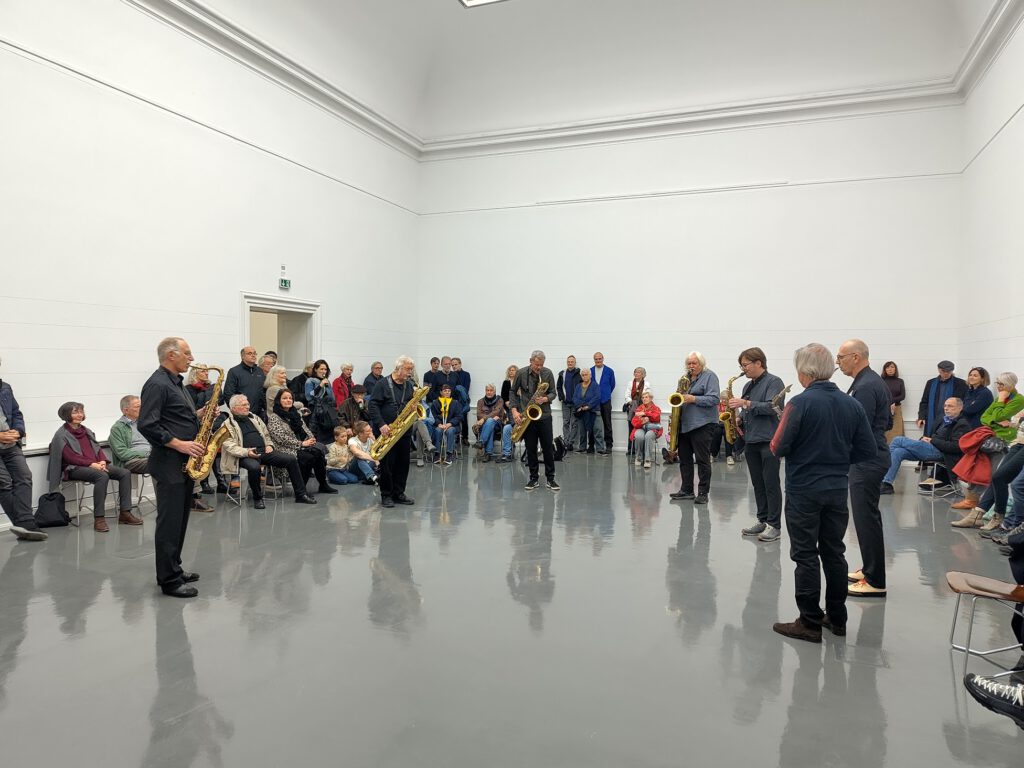
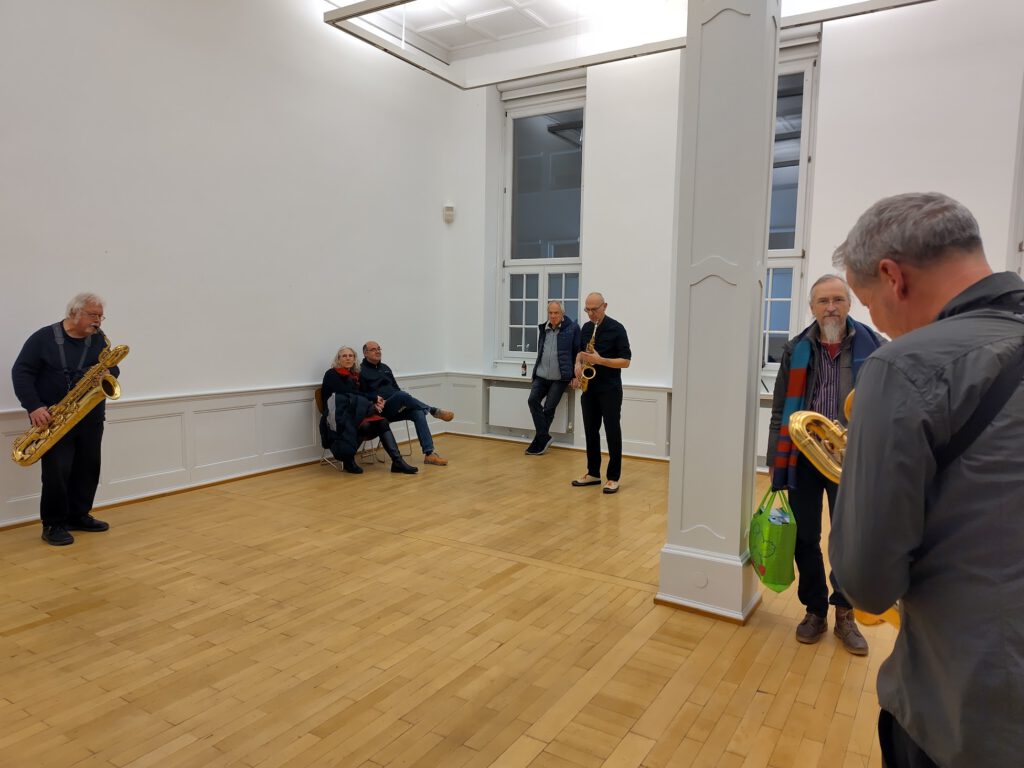
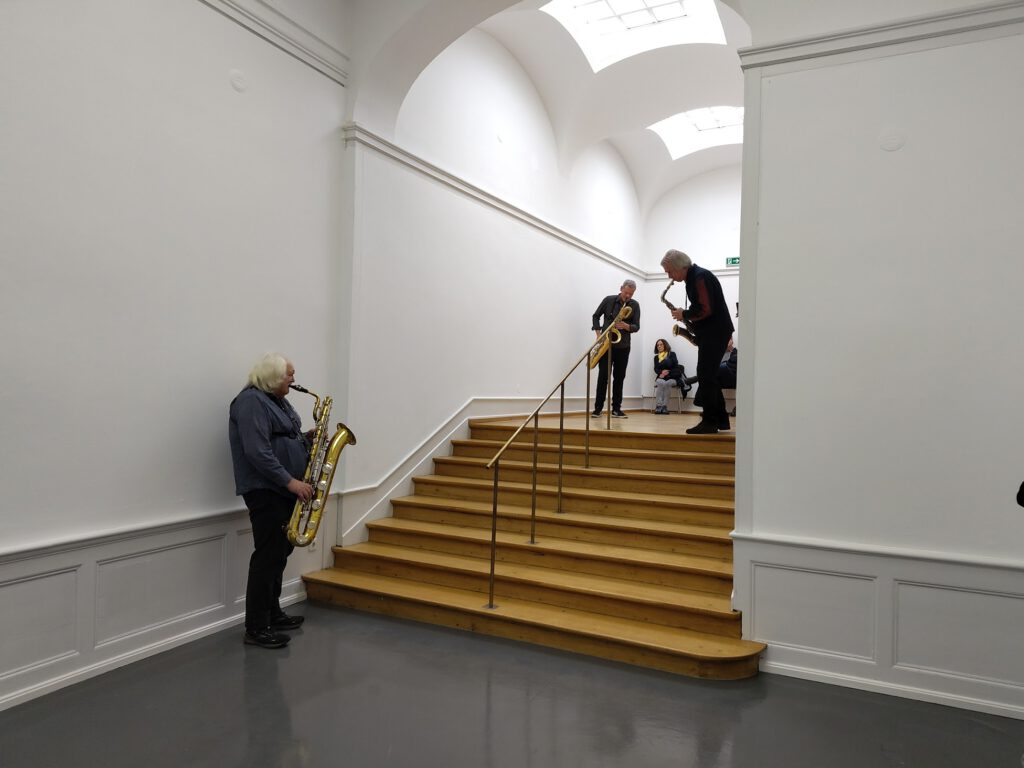
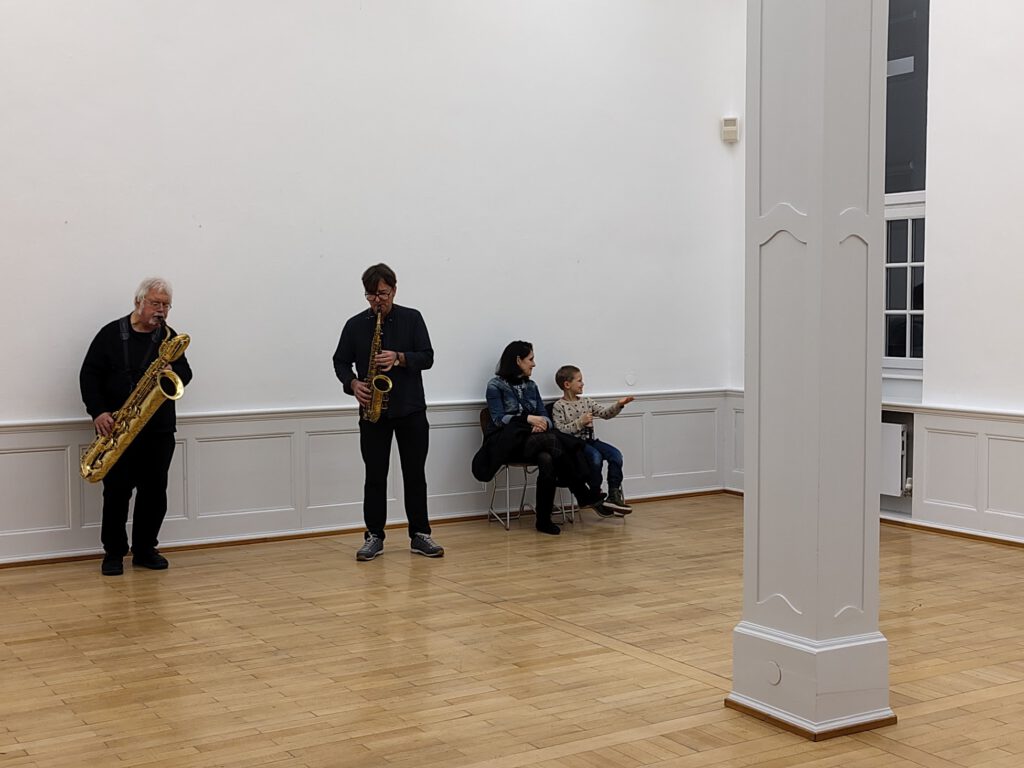
Last weekend, Raum-Musik für Saxophone played in the incredible, acoustically challenging spaces of the Badischer Kunstverein in Karlsruhe. It is a venue usually dedicated to contemporary art, but this time — because it was in between exhibitions — the walls were white, and we had the chance to perform in this specific space for the 6th time in our 40-year history.
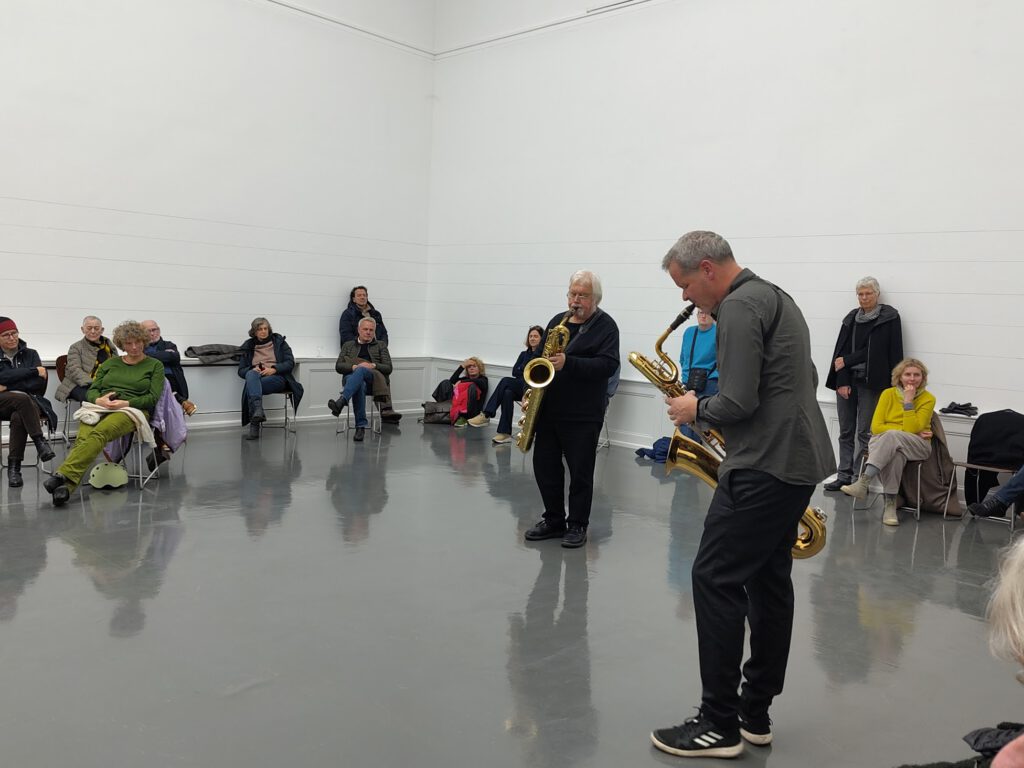
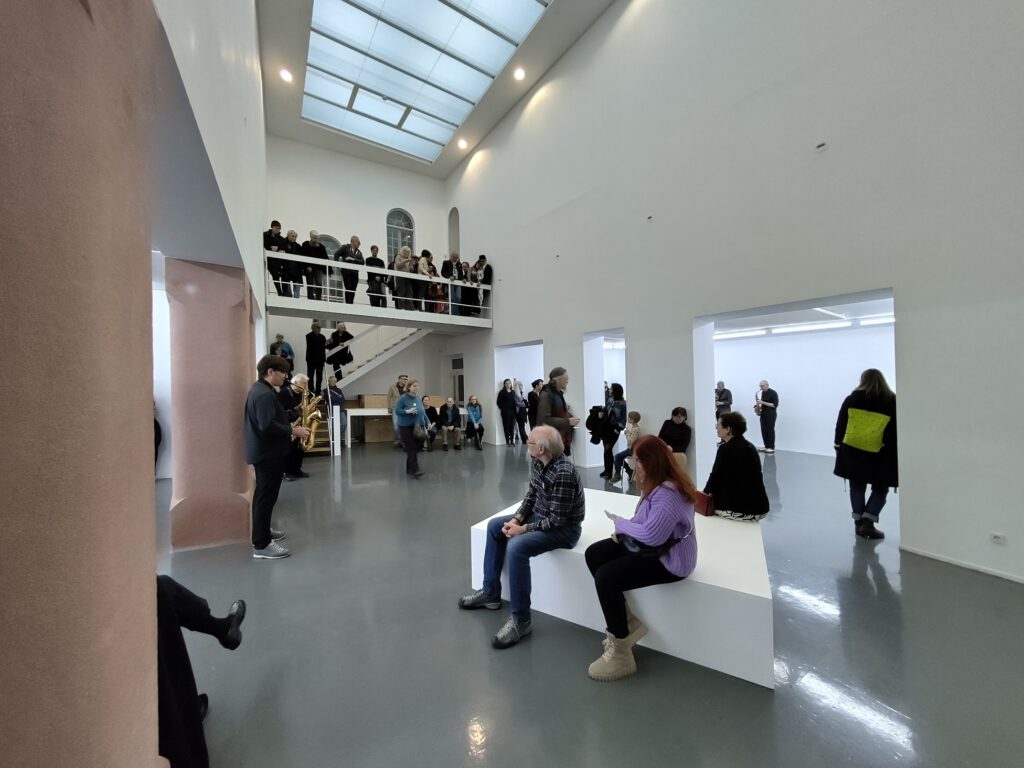
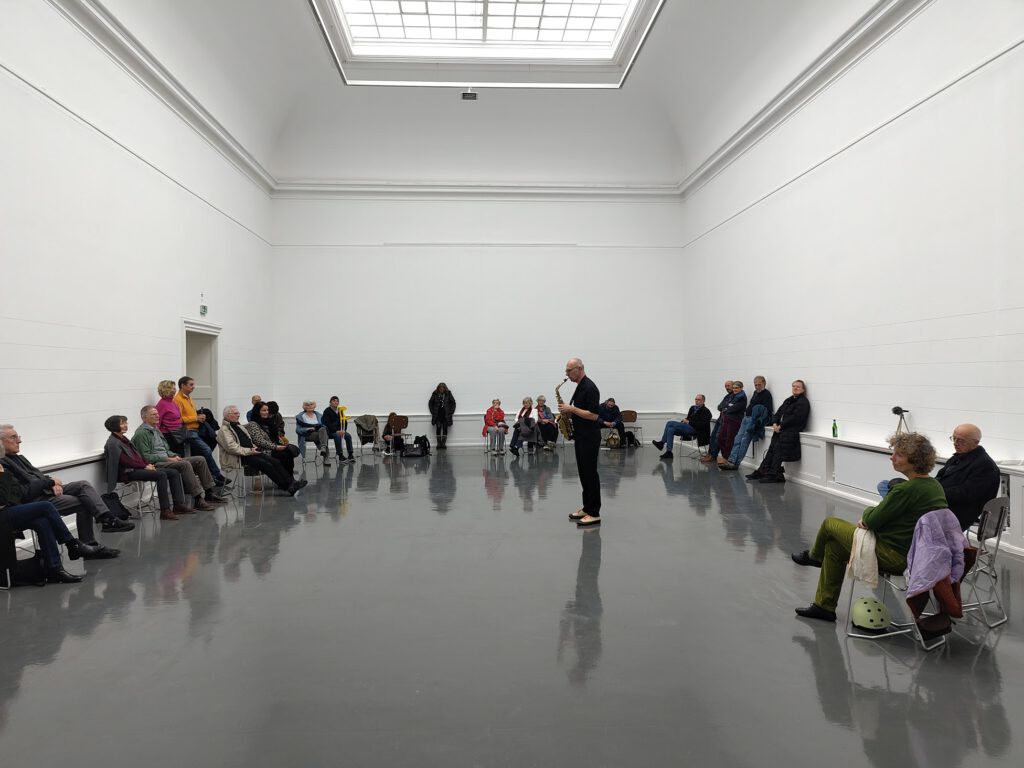
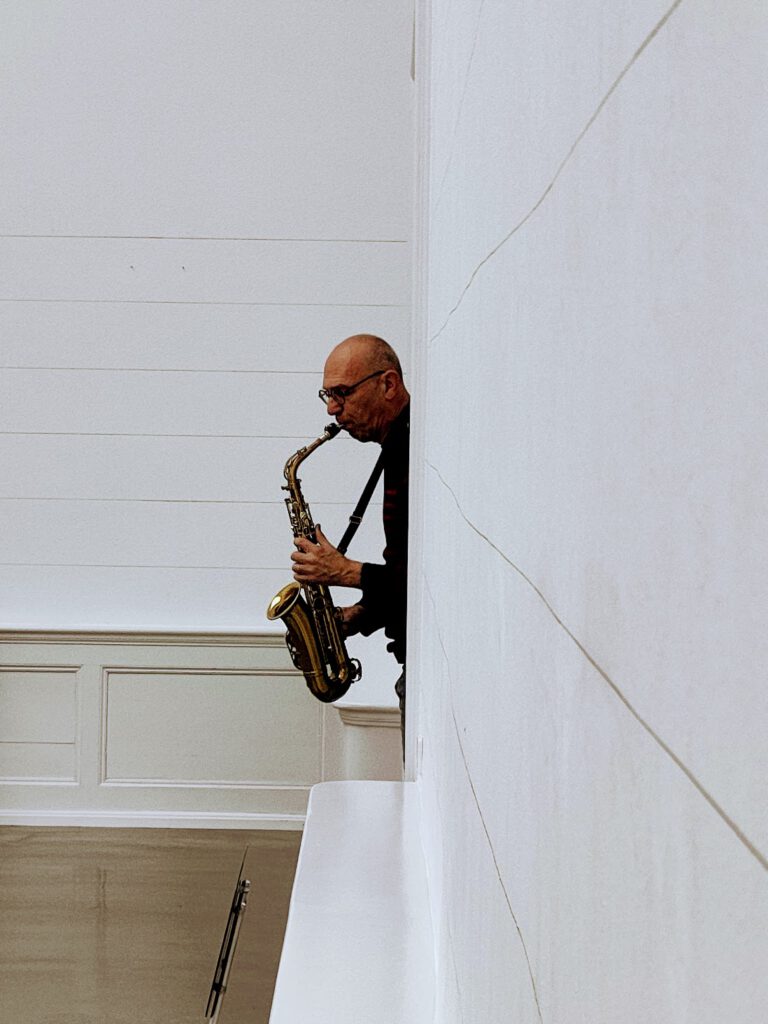
Reflecting on that performance and our history together, here are five things I have learned:
1. The space is the star
When we play a venue, we have to understand and feel its unique characteristics. In the Kunstverein, every room has a different reverb. There is a paradox here: acoustically, the space actually sounds “best” (most resonant) without an audience, but the performance only makes sense with an audience to witness it.
2. Every experience is individual
Because the audience can walk around or choose different positions during the concert, no one will hear the same concert — even though everyone is listening together. The mix is unique to where you stand.
3. Play and pause
As a player, it is hard to hear the other musicians when you are in “full power mode.” You have to make individual and collective decisions to keep it engaging. Often, the most interesting musical choice you can make is to stop playing and let the silence speak.
4. There is always a score
Although we always play without sheet music, preconditions, or composition, we are led by the experience we have had together. Our “score” is the shared intuition built by playing over 40 years in countries like Russia, Iceland, France, Germany, Switzerland, and Romania.
5. You hear what you know
Free improvisation needs active listeners — both in the group and in the audience — to make a new memory based on the experience of listening together.
How does this resonate with you? How is this different to how you operate as an organisation?
But wait, there’s more I discovered while playing:
Learning from rehearsing – business improvement
Here is a short excerpt from the rehearsal of our Saturday concert in the empty art museum in Karlsruhe. I am sharing this because there are so many insights from organising sound, silence and music that are applicable for any organisation and business improvement.
Early on, I learned that if you want to understand a musical piece, try to attend the rehearsal. You will hear the players making mistakes, or the chief listener (e.g. conductor in classical music), sharing what he hears from his point of view and giving directions to create one exceptional sonic experience for the audience.
This goes not only for classical music, but in general it counts for all kinds of music. In amplified music, you also get the technical sound check and the test of how the musicians can hear themselves and others during the concert (called monitoring).
So what do you rehearse when you are playing free?
How do you improvise?
Well, in our case — we never play on a stage, but in interesting venues and architectures — we play to find each other and hear how the space sounds and resonates. We check how we can play and listen at the same time (which is 100% impossible) and how we might create the one sound that fills the venue. Strange enough, the space always sounds different when the audience is there. In the video you see only the players; in the concert a few hours later we had 100 people in the room.
1. What is your rehearsal?
2. Who is your chief listener?
3. How do you improvise when you don’t know what everybody is playing?
The answer to question 3 is on the music thinking framework and called ‘Jammin’ before Score’.
Let me know if this is interesting for you; I have different workshop formats and interventions to work with every kind of organisation.